Tuesday, April 24, 2007

"The Secret" Book Review (part I)

I have wanted to review this book from the first time I heard about it simply because of its' popularity. I have finally gotten the chance to do just that having received it on loan from someone very dear to me. My assumptions from the outset of what "The Secret" was going to be was basically a New Age version of a health wealth and prosperity gospel that makes so many televangelists popular. I found it to be just that and in many tragic ways much worse.

Aesthetics:

Firstly, I think that it is important to comment on the mere appearance and package that this message comes in. The Book cover, as well as the inside pages are decorated with what looks like an ancient text on aged parchment with unintelligible sentences in cursive all over. The "S" in the word secret on the cover is inside an ancient appearing wax seal giving the book a look of old wisdom. When you hold the book itself you will notice that it is a bit heavier than most books its size, when you open it up you will see why. The pages are a very thick glossy paper also decorated with an aged browning look with cursive and various mystical/technical looking drawings on many pages.

It is also full of colorful images and pictures of the many co-authors in the back. To be short it is a very slick package. The text itself if put into the right format and made simpler (less drawings and giant font headings) probably could have been reduced to 75 pages and still be very readable. It took me probably an hour and a half to read all 184 pages and I am a very slow reader so that should give you an idea of how easy of a read this is.

So What IS "The Secret"

The central theme of the message these writers want to give us is dubbed "The Secret". If you watch the video (Link here I strongly encourage any reader to watch the first few minutes to see what I am talking about) you will see that this idea is treated as if it is hidden knowledge that has been sought after hidden, handed down, and kept out of the hands of the common folk by the powerful who knew it. Now it is here for you...so what is it?

"The Secret is the law of attraction!" (p.4 Bob Proctor)

So what is the "law of attraction"?

"The law began at the beginning of time. It has always been and will always be." (p.5)

Well if it began then it hasn't always been...moving on though.

"It is the law that determines the complete order in the Universe, every moment of your life, and every single thing you experience in your life. It doesn't matter who you are or where you are...You are the one who calls the law of attraction into action, and you do it through your thoughts." (p.5)

So that is it in a nutshell, the rest of the book is for the most part just application of what was just said. There is this law of the Universe (note the capital "U" I will come back to that later) that basically is attraction. Like things attract like things. So if you are thinking certain thoughts you are attracting what you think about. You get what you are thinking about.

"The law of attraction is a law of nature. It is impersonal and it does not see good things or bad things. It is receiving your thoughts and reflecting back to you those thoughts as your life experience. The law of attraction simply gives you what you are thinking about." (p.13)

That is really it, this sort of technique of thinking about the right things or what you want rather than what you don't want will cause the Universe to give you what you want. This will apply to wealth and the material things, the kind of mate you get, your personal health, and even more globally in peace programs. There are later chapters applying this "right mode of thinking" in all these areas.

So simply put, you can have the life you want. You are the master of your own destiny, the sculptor of yourself. You are the sovereign over all of your life. You determine whether or not you will be rich, have a smoking hot spouse, ever get a disease etc. You can see how this is so appealing in a society that is ripe with hedonistic materialism and self worship.

This really brings me to what I will call the "Dark Side of 'The Secret'".

The Dark Side of "The Secret"

As I will more fully show "The Secret" is not just a technique, it is a worldview. It has things to say about who you are as a human being, who/what God is, and it deals with philosophical problems of suffering. How does this worldview which says that you really are in control of EVERYTHING that comes your way deal with suffering? Well very very coldly and harshly:

"Everything that surrounds you right now in your life, including the things you're complaining about, you've attracted. Now I know at first blush that's going to be something you hate to hear. You're going to immediately say, 'I didn't attract the car accident. I didn't attract this particular client who gives me a hard time. I didn't particularly attract the debt.' And I am here to be a little bit in your face and say, yes you did attract it. This is one of the hardest concepts to get, but once you've accepted it, it's life transforming." (p.27-28 Dr. Joe Vitale)

I was honestly a bit shocked at this. I know that when you embrace these ideas that this is where they lead, however I rarely find New Agers who are basically biting the bullet on this. It is just so cold. Honestly think of what this man is saying here. A women who was savagely beaten and raped really attracted that to herself through the thoughts she projected into the Universe. A person who has cancer eating their body away, really attracted that disease through the thoughts they projected to the Universe. Fill in any suffering afflicting an individual and if you embrace this idea of the law of attraction you must logically say what this man said.

But there is more, in case what this man said isn't clear enough the main author makes it abundantly clear as she writes:

"Often when people first hear this part of the Secret they recall events in history where masses of lives were lost, and the find it incomprehensible that so many people could have attracted themselves to the event. By the law of attraction, they had to be on the same frequency as the event. It doesn't necessarily mean they thought of that exact event, but the frequency of their thoughts matched the frequency of the event. If people believe they can be in the wrong place at the wrong time, and they have no control over outside circumstances, those thoughts of fear, separation, and powerlessness, if persistent, can attract them to being in the wrong place at the wrong time.

You have a choice right now. Do you believe that it's just the luck of the draw and bad things can happen to you at any time? Do you want to believe that you can be in the wrong place at the wrong time? That you have no control over circumstances?

Or do you want to believe and know that your life experience is in your hands and that only all good can come into your life because that is the way you think? You have a choice, and whatever you choose to think will become your life experience.

Nothing can come into your experience unless you summon it through persistent thoughts."
(p.28)

The embracing of that last line comes at a price. Sure you are now in "control" to call down wealth and health, however, it also entails that every pain you experience is really your fault. What does that do to say Hurricane Katrina? Or the Virginia Tech massacre? These cease to be tragedies, it was just the impersonal and pitiless Universe dealing out what people attracted to themselves. That is the logical conclusion if you want to really embrace this.

Again I am surprised that they would be this upfront about these issues in this book. I was honestly expecting nothing but a bunch of watered down New Age and Positive Thinking techniques and for the most part that's what you have in the book. However, every so often there is a barbaric honesty as to what this worldview all entails. It seems to indicate to me that these people really believe this stuff, it is more then just a magic tonic to cure what ails ya. This is a worldview, a pantheistic New Age one as we are about to see.

So What about God?

As I read the book there were many times it seemed as if the author was talking to somebody and engaging some sort of deity as part of "The Secret". Take for example this quote:

"Every morning, I do not get out of bed until I have the feelings of gratitude for this brand new day and all I am grateful for in my life. Then as I get out of bed, when one foot touches the ground I say, "Thank," and "you" as my second foot touches the ground. With each step I take on my way to the bathroom I say "Thank you." I continue to say and feel "Thank you" as I am showering and getting ready. By the time I am ready for the day, I have said "Thank you" hundreds of times." (p.75-76)

Now as I read this I was a bit perplexed and I blurted out "Pssh! Who are you saying 'Thank you' to?!" because the author has not even used the word "God" one time yet. As I finished the book the picture became very clear. I also found it was very interesting that these very strong statements about who we are and who God is come in the last two chapters of the book. This is all AFTER they teach you the positive thinking technique to get rich, stay healthy and attract hot babes on the beach.

"So whichever way you look at it the result is still the same. We are One. We are all connected, and we are all part of the One Energy Field, or the Supreme Mind, or the One Consciousness, or the One Creative Source. Call it whatever you want, but we are all One." (p.162)

Note that "One" is with a capital "O" this is a very popular New Age rendering of pantheism, in short everything is God. Remember the Beatles song, "I am you and you are me and we're all in this together..."? Well Koo Koo Ka Choo that's exactly what is being described here. This is Pantheism everything is God, that explains the "Universe" references. The above quote not clear enough? Well here's another one that is not at all ambiguous:

"You are God in a physical body. You are Spirit in the flesh. You are Eternal Life expressing itself as You. You are a cosmic being. You are all power. You are all wisdom. You are all intelligence. You are perfection. You are magnificence. You are the creator, and you are creating the creation of You on this planet." (p.164)

Again, I was a bit shocked that this was in here. Not that it is at all new to me but I just figured this book was a watered down New Age technique. There is nothing watered down about the above quote. The author is saying in no ambiguous language that we are all God. Now again I don't think the author would say this if this was just a scam in her mind, she really believes this stuff.

Again I think that it is interesting that these very in you face Pantheistic pronouncements come AFTER they have taught you the techniques of how to get rich and score with the beach babes. I think that is strategic considering the ideas in this book have been touted as "Christian". Also I don't think most Americans would read very far if on page 1 the book read "The Secret is that you are God..."

So now you have a better picture of who is being "Thanked" in the morning as the author gets out of bed. As well as why the "U" is always capitalized when they refer to the Universe giving to you. They are teaching Pantheism. This is worship of self amplified to the greatest heights.

The Deity and Worship of Self:

"It is not people who are giving you the things you desire. If you hold that false belief, you will experience lack, because you are looking at the outside world and people as the supply. The true supply is the invisible field, whether you call that the Universe, the Supreme Mind, God, Infinite Intelligence, or whatever else." (p.163)

In short you have one person to be thankful to in all of your success...YOU.

That said I think this explains the success of the book. Our culture is full of self centered autonomous notions of self reliance, freedom, rights, and over all an idolatry of self pervades our culture. I honestly think this is the greatest idol of American culture we as Christians need to challenge in our day, the idol of self.

Think of nearly all the hot button moral controversies in our day and what do we find at the center? My rights, my freedoms, my life etc. So we hear of a woman's "right to choose" whether or not the time is "right" for her to have a baby. People have the right to choose when we will die with "dignity" because it is MY life and I will decide how, when and on what terms it will end. Or even it is my right to marry who I want to marry, even if that person is of the same sex, it is MY life and it is MY choice, you have no right to deny me this.

In all of these issue SELF and MY personal choice are at the center. We want complete authority to govern the type of life we will have, we view it our "rights" to decide these things for ourselves. Well in this sort of cultural setting where self is at the center of life, a philosophy in a book like "The Secret" fits quite well. This book in effect puts you at the very center of the Universe. I mean you can't be anymore self centered then to view yourself as God in flesh.

In effect it says what the secular culture says and spiritualizes it: "You can have the life you want, you are in complete control of every aspect of your life." How do people who embrace this right to choose the type of life we want act? Well their actions manifest in hedonism. I want money, girls, cars, health, etc. The TBN preachers have thriving off of these desires for decades now. The Secret is cashing in on a very lucrative market, and they have Oprah Winfrey giving them air time to boot.

In the next post I will explain how thoroughly un-Christian all of this really is. You don't have to be a heavy duty Bible student to see what was described has nothing to do with Christianity. The Secret is in no way compatible with Biblical Christianity as has been so often stated, it is antithetical to Biblical Christianity.

Saturday, April 21, 2007

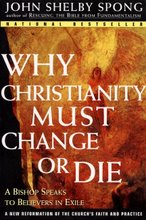
Why Christianity Must Change or Die, (Review ch 5)

So it has been a while since I last wrote on this book. Frankly because I lost interest in it, so far all I have read is Spong giving his feelings about why he doesn't like aspects of Christianity (like the word Father referring to God) and him basically just making wild assertions with absolutely nothing to support it (like saying Paul was a self loathing homosexual). Simply put Spong has approached the Bible with outdated atheistic presuppositions which rule out God's ability to work in the universe from the outset. For instance Spong says God isn't in control of things like lightning because science has revealed to us how lightning works...as if the only way to be able to say God controls lightning is for us to not be able to explain it or observe translucent hands in the sky throwing bolts down to the earth.

That is a rough assessment of what we are dealing with when we come to Spong, and many other liberal theologians for that matter, people who simply are operating on non-Christian presuppositions. This sort of line of thinking continues on in chapter 5 of the book entitled: "Discovering Anew the Jesus of the New Testament"

Early on in the chapter Spong begins with this assertion:

"The Bible is not the word of God in any literal or verbal sense. It never has been! The Gospels are not inerrant works, divinely authored. They were written by communities of faith, and they express even the biases of those communities. The Gospels are not without significant internal contradictions or embarrassing intellectual or moral concepts. The Gospels are not static. They reveal changing evolving theological perspectives. They are not even original. They lean far more than has yet been realized on Paul and the Hebrew scriptures. They are not the words of eyewitnesses as so often has been claimed. Most of the eyewitnesses to the life of Jesus were long dead before the Gospels entered history." (p.72)

Well now that is a mouthful. Basically Spong just rejects everything orthodox Christians have believed about the Gospels throughout church history. However, as I said above he has no basis to make any of the claims he does here, nor does he give us any. I will point out a few blatant errors in what was said here.

"The Bible is not the word of God in any literal or verbal sense. It never has been! The Gospels are not inerrant works, divinely authored." (p.72)

Again just a nice dogmatic statement by Spong. All I will say here is that this is NOT what the men who wrote the scriptures thought. They believed strongly in Divine authorship of the scriptures as Paul writes:

"All Scripture is breathed out by God and profitable for teaching, for reproof, for correction, and for training in righteousness, that the man of God may be competent, equipped for every good work." (2 Tim 3:16-17)

"The Gospels are not static. They reveal changing evolving theological perspectives." (p.72)

That's interesting because yet again the men who wrote the scriptures seem to disagree, they believed that that had received the consummation of God's revelation to man, Jude writes:

"Beloved, although I was very eager to write to you about our common salvation, I found it necessary to write appealing to you to contend for the faith that was once for all delivered to the saints." (Jude 1:3)

I don't know when something is delivered once and for all it would seem fairly static and unchanging to me, but I am just a crazy superstitious science hating fundy what do I know. So again maybe this "evolving theological perspectives" is Spongs idea of how Christian theology and theology in general developed, but it is just that, Spong's opinion, completely bereft of any factual merit. When we look at the facts (what the NT writers themselves thought) we see them in direct opposition to Spong, in that they believed God's revelation to man through Christ was the capstone of revelation to man.

As for the Gospels having contradictions, Spong needs to show us how and where they are in serious conflict. Again this is just a nice statement, bereft of any real evidence. As for the Gospels relying on Paul Spong will try to make that case as the chapter goes on so I will address the "evidence" for that in just a moment.

The evidence to support such a seemingly unfounded claim that Paul was heavily influential in the forming of the gospels really begins with Spong's anti-supernatural presupposition that prophecy simply does not happen. How does this effect Spong's understanding of the Gospels you may ask. Well in the 3 synoptic gospels near the end of His ministry Christ predicts the destruction of Jerusalem. We know that Jesus was crucified around 33 AD and that Jerusalem was trashed by the Romans in 70 AD.

So If you look at what I just described above and you are working off of presuppositions that rule out the supernatural and view the universe as a closed system in which God if there is a God can not work or operate in (doing things like prophecy) then you will assume that these "prophecies" of the destruction of the temple made by Christ which were seemingly fulfilled years later were really not prophecies at all they were actually written after the fact. Hence liberal scholars late date the Gospels, they all must have been written after 70 AD because the older ones (synoptics) all have this "prophecy" in them.

Well ultimately this line of thinking is committing the logical fallacy of begging the question as to whether prophecy in fact does occur and if God in fact does operate in time and space. That said, Spong writes:

"For example, the capture and destruction of Jerusalem by the Roman army in 70 CE is a powerful reality the the background of each of the Gospel narratives." (p. 72-73)

Note that, it is "background" in the writers mind, it already happened and shapes how they wrote. I think the only way to assume this is to begin by presupposing prophecy can not happen. Another minute note is the fact that Spong uses CE (Common era) in referring to the year 70 rather than the Christian AD ("Anno Domini" year of our Lord). This is minute but it just shows how thoroughly unchristian this mans thinking is.

Next Spong makes some pretty sweeping statements about the "development" of early Christology as he writes:

"They do not learn in church that the virgin birth accounts were not original to Christianity and did not appear in Christian history until the ninth decade. [This is the date Spong attributes to Matthew] The same thing is true of the narratives that speak of the bodily resurrection of Jesus. They, too, were ninth-decade additions to the Christian story." (p. 73)

Well firstly I would say people don't learn this in Church because it simply isn't true. I mean honestly there is not reason to give such late dates to the Gospels except for the fact that these men don't believe in prophecy. So if I just flat out stated "Mark was written in 40 AD" could Spong really give any reason aside from the presupposing the prophecies of the destruction of the temple were written after the fact that would necessitate a later date for Mark? I don't think so at all.

As for the bodily resurrection being a ninth decade addition, Spong needs to go check his own self ascribed dates again. He himself would attribute a 70 AD-ish date to Mark yet it is in this Gospel we see clear descriptions of Christ's bodily resurrection. Spong of course assumes that since Mark's description of the resurrection is the briefest of the gospels and Jesus isn't eating or being touched by anybody that therefore Mark didn't believe in the bodily resurrection. This again is not the case and is yet another unwarranted assumption on Spong's behalf. For example we read:

"And entering the tomb, they saw a young man sitting on the right side, dressed in a white robe, and they were alarmed. And he said to them, "Do not be alarmed. You seek Jesus of Nazareth, who was crucified. He has risen; he is not here. See the place where they laid him." (Mark 16:5-6)

The mere fact that the tomb was empty, and Christ's body was not where they laid it shows His physical body was raised from the dead. No exegetical tricks just straight forward reading. Mark wrote about the physical bodily resurrection of Christ, this is clear because the tomb was empty and the place in the tomb where they laid Him was no longer occupied. The mere fact that Christ's body was not there shows His resurrection was bodily.

Moving on, after talking about all the words Paul ascribes to Christ's work as Paul's ecstasy over "experiencing" Christ, Spong makes this assertion about Paul's theological writing:


"The very moment we move from ecstatic proclamation to explanation, the presuppositions, definitions, and stereotypes of the ages begin to shape our words. That is inescapable. That is why theological explanations can never be literally true or eternally applicable." (p.75)

I just don't know how in the world Spong can say this and not see the irony in that he is guilty of everything he says should be avoided. He is approaching the Bible with his post-modern presuppositions, his anti-supernatural assumptions, and saying his theological explanation of god is true and the Biblical is false.

Now here is the rub folks, Spong in the next sentence just kind of matter of factly states the following:


"In his epistle to the Romans, written about the year 58 CE...Paul began to develop explanations for his Christ experience." (p.75)

This is important for Spong's seemingly ridiculous assertion that really Paul was the shaper of the Gospels. Again if we assume an anti-supernaturalism the gospels are no younger then 70 AD, Romans is written in 58 AD. It would follow that Paul's writings would then be influencing the men who wrote the gospels before they wrote them. Also note how Spong reinterprets Paul's conversion and his explanation of the truths of Christianity...he is now making sense of his "Christ experience". This is a thoroughly new age and mystical reinterpretation of Paul. We are all on our own personal privatized trips with God (or rather the impersonal force of the universe), no one has THE TRUTH rather we all have OUR TRUTH through experience.

This rejection of THE TRUTH leads to Spongs comment on Jude 3 (I have quoted it above)

"[This] is quite misleading. No such faith ever existed, at least not as a body of doctrinal statements. Christianity, rather, evolved from simple ecstatic proclamations of faith into more and more complex theological forms with the passage of time." (p.76-77)

Again, this is Spong's reinterpretation of how Christianity was born, in it's infancy it was purely mystical then it grew into these complex doctrinal statements. Well as for the response to Jude 3, which Spong needed to reply to, I think Spong's rendering makes Jude's exhortation absolutely meaningless. The people had no idea what Jude was referring to if Spong is right when Jude told the to contend for the faith once for all delivered to the saints. That is like saying to a man "Guard the moose shaker with your life!"

No, they knew what Jude meant, just like we know what he meant. While it is true that the letters of Paul are not written in systematic theology format that does not mean that there was not a core understanding of what Christianity was. It was not just mystical trips. But the reality of Jesus Christ crucified for sinners and risen victorious.

Now Spong makes his move as he writes:

"Some ten to fifteen years after Paul had written his epistle the the Romans, the Gospel of Mark came into existence. ..Mark quickly informed his reader of his purpose for composing this book. He was writing, he announced in the first verse, 'The beginning of the gospel of Jesus Christ-the Son of God' Mark could hardly articulate his conviction in this manner and still accept the Pauline theory that 'God designated Jesus Son of God at the time of the resurrection' So he adapted Paul's words to his purpose in an interesting way." (p.77)

Spong is playing with the word "declared" and making it mean something that it simply was not intended to mean. He is trying to say that Paul viewed Christ as being crowned as divine at his resurrection. According to Spong we will see that Mark wants that pushed back in the life of Jesus, he writes:

"Two parts of Paul's earlier declaration he not only accepted by gave them to narrative form. Mark took Paul's words, that God had designated Jesus to be God's son, and described just how it was that this designation occurred. The voice of God spoke from heaven, Mark declared, and said of Jesus 'This is my beloved Son in whom I am well pleased.' (Mk 1:11). Mark has provided for God the actual dialogue to expand this Pauline affirmation.

Second, Mark has taken Paul's idea that this designation came by way of the 'spirit of holiness' and has given it a specific setting. He wrote that 'the heavens opened' and the spirit, descending 'like a dove' came upon this Jesus in a very physical way (Mark 1:10). Mark, we begin to realize was following the Pauline script closely, and, in the process, he was revealing just how his own definition of Jesus had been dramatically shaped by Paul." (p.77)

Now I wanted to quote these big hunks so it is clear that I am not making this up. The first time I heard that Spong thought that Paul was really the mastermind behind the Gospels I just laughed at how absurd such an idea seemed. However, Spong is not joking. Spong really does think that Mark was basically regurgitating Pauline theology in his Gospel. So because Paul refers to Jesus as the Son of God then anybody who wrote after him (graciously granting Spong the unsupported dates he gives us) was therefore getting this notion of Jesus as the Son of God from Paul? Spong's conclusion simply does not follow logically even if we grant him the late date for Mark.

Also I think anybody who is not operating on a fragmented privatized subjective view of truth and knowledge about God like Spong is, would just assume that these men write similar things about Jesus because they are talking about the same person. It doesn't logically follow that one is necessarily borrowing from the other. A more believing approach is that these men were both moved by the same Spirit and thus wrote similarly.

What Spong is engaged in here is an attempt to explain the Gospels origins in a rather subjective post-modern sense. Mark wasn't reporting any facts about the life of this person Jesus, he was just trying to give a picture of the Jesus he believed in which he got from Paul...the "Son of God." So Mark knows that there was no voice from heaven and no Holy Spirit descending on Jesus he just made these up to give his "experience" as Spong would say meaning. I am sorry but that is just a bunch of unsupported rubbish.

There is a name for this sort of thinking, unbelief.

Spong goes on to say that Matthew wanted to push back Jesus as the Son of God even further he writes:

"By the time Matthew wrote, some ten to twenty years after Mark [so that gives us between 80-95 AD I mean CE for a possible date of Matthew according to Spong] and perhaps 50 to 55 years after the time of Jesus, the story of the proclamation of Jesus' divine origins had moved once again. Matthew began his story of Jesus' life with the narrative of his birth. It was for Matthew an intolerable idea that Jesus became something either at his baptism or at his resurrection that he was not already." (p.78)

Well there are a number of things that are just plain erroneous here:

1) Spong presumptuously describes Matthew's thinking and attitudes towards Mark's presentation of the life of Jesus. It was "intolerable" for Matthew? Where did he get that from? Yet again we find that it isn't the right wing fundy nutcases who are fond of believing in or rather creating myth. To be blunt Spong just made up this attitude in Matthew to make his system of understanding the Gospels look sensible. Matthew didn't like the idea that Jesus became the Son of God at His baptism, so he creates a story of Jesus birth. Spong in saying this is playing a time traveling Freud.

2) I also don't think that it was Paul's or Mark's point that at specific times in Christ's life, which they describe, that Jesus became the Son of God. Just because Mark doesn't describe the virgin birth does not mean that he thought Jesus became the Son of God at His baptism. It was simply that at His baptism that Jesus was announced to be such before eyewitnesses.

3) Also it is untrue that Paul never mention the birth of Christ, although he doesn't explicitly spell out the story of Mary it is still there. Also this proves that Paul did not think that Jesus became the Son of God at his resurrection as Spong continues to repeat as if it is just matter of fact, that is simply a grossly twisting Romans 1:4 (the text Spong refers to which he chose not to cite). We see Paul refer to Jesus as God's Son in reference to His birth as he writes:

"But when the fullness of time had come, God sent forth his Son, born of woman, born under the law, to redeem those who were under the law, so that we might receive adoption as sons." (Gal 4:4-5)

So what I think we mainly see here is that Paul held that Christ was the Son of God (pre-existent) who was then sent forth and born of a woman and has done a work of redemption to secure adoption for others. Spong of course denies all of this but he does so against the rather obvious teaching of Paul on Christ.

Moving on, so now that Spong has explained Matthew's imposing of his subjective ideas of what Jesus should be like into his Gospel. He really just explains all the accounts of the Gospels in this sort of fashion, these men just made up tales about Jesus to give their "experience" (a word Spong is quite fond of) some meaning. So the writers really knew that the things they wrote weren't real history they were just trying to make sense of their experience. So says Spong.

Peter says otherwise in one of his epistles:

"For we did not follow cleverly devised myths when we made known to you the power and coming of our Lord Jesus Christ, but we were eyewitnesses of his majesty. For when he received honor and glory from God the Father, and the voice was borne to him by the Majestic Glory, "This is my beloved Son, with whom I am well pleased," we ourselves heard this very voice borne from heaven, for we were with him on the holy mountain." (2 Pet 1:16-18)

Peter emphatically claims that he was there and that he heard and saw these events, they were not made up. They were facts that happened in real time and space.

So we are faced with a dilemma on the one hand we have Spong almost 2000 years after the fact saying that these men very consciously made up stories to make their Jesus "experience" make sense, thus they made up stories declaring Him to be the Son of God. Yet we read Peter who was there with Christ saying these things really happened and he saw them and heard them and he knows that they are not myths.

I don't know about you but I will take the testimony of the men who were there and emphatically say that they saw these things happen over some 2000 years later Johnny come lately who says that they conciously made it all up.

Sunday, April 15, 2007

Thursday, March 15, 2007

Why Christianity Must Change or Die (part 4 Chapters 3 and 4)


The last chapter ended with Spong explaining how even though he basically agrees with all of the arguments of Atheism yet he remains a "Christian" because he has experienced something "other". This is a reduction to sheer mysticism, and Spong is more forth coming with this confession in following two chapters. It really was evident to me in reading chapters 3 and 4 that Spong was really beginning to contradict himself in several areas. I will point out these areas as I go along through these chapters.

Chapter 3:


This chapter is rather uneventful as Spong is basically trying to explain why he is just not an Atheist. In this chapter he relies fairly heavily on using outdated Atheistic arguments against Christianity (the straw man understanding Spong has of Biblical Christianity). He relies very heavily on the argument against God's existence posed by Freud which basically goes as follows:

1) People view God as a Divine Parent who is watching over them, and caring for them.

2) People would like to think that 1) is true because it gives comfort.

3) Therefore, people invent an omnibenevolant prayer hearing/answering God to provide a sort of comfort. (This is out of the longing for father figures in our lives as we grow up away from our parents, or just pie in the sky hopes for heaven)

/.:4) Therefore God does not exist, He is just a figment of our imagination longing for comfort.

Spong simply loves Freud's arguments and uses it to slap around the classical Christian ideas of a God who acts in time and space, hears and answers prayer, and tenderly cares for His people. Unfortunately for Spong if he had spent just a little time in critical thought on Freud's argument he would see how it can easily be flipped right around as follows:

1) People don't believe God exists.

2) People would like to think that 1) is true because it gives them comfort.

3) Therefore, people who reject the existence of God do so out of a desire for psychological comfort. (To eliminate the sense of moral accountability, and fear of judgement.)

/.:4) Therefore, God exists, the denial of His existence is out of wishful thinking motivated by a longing for comfort.

So in short with chapter 3 we have Spong basically agreeing with all these Atheistic statements. This is because he works from the same Materialist presuppositions as Atheists do. So why then does Spong still consider himself a believer, nonetheless a Christian? At the very end of the chapter he dedicates an entire two sentences to tell us why he still believes in God as he writes:

"It was when I reached this conclusion [Freud's argument against God's existance] but still could not dismiss what seemed to me to be an experience of something other, transcendent, and beyond all my limits that I knew I had to find another God language. Theism was no more." (p.55)

A couple of things need to be noted here. Firstly we see that Spong's belief in God is not rational. Spong can not give any rational reason as to why he is a believer higher than "I have felt things mystically I know it is God." Now I don't fault him entirely on this, I don't think every person needs to have an airtight explanation for why they believe. But if this is all we have and we don't go beyond this as we grow then we have divorced our belief from reason. And that is precisely what Spong's faith is, an irrational mystical leap into an area of non-reason. His materialist presuppositions logically lead to Atheism, yet Spong rejects that in favor of an irrational mysticism.

Secondly, I guess what I just don't understand is why at this point Spong didn't stop calling himself a Christian, and just dub himself a mystic. If God does not hear prayer, Jesus did not rise from the dead, nor is there any real judgement to come, than I would say, with I think common sense, I don't think Christianity needs to change in order to stay alive (As the book title states). I would say that Christianity is already dead, (being never really alive to begin with, just a big fat lie) and in need of being abandoned altogether.


Chapter 4
The chapter begins with Spong recounting a question a parishioner asked him:

"Bishop, is it possible to be a Christian without being a theist?"

Now for those of you who aren't immersed in Spong's language games, theist does not properly mean belief in God. Spong uses the word "theist" as a dirty word referring to man's placing of attributes to God (statements like: "God is personal", or "God answers prayer") . So reworded the person is asking: "Can I be a Christian and not believe in propositional truth?"

No. You can be a mystic, but not a Christian.

Spong goes on to explain how his view of God really has become one that can not be defined, just experienced. This is particularly clear as he recounts a trip to China where he was deeply touched by the Buddhist religion:

"Buddhists believe in God, but not in a deity who is defined in theistic terms. Exploring the levels of meaning that can be found in an Eastern faith tradition can help us learn to see through such limited words as theism. It also reveals that our ancient Western definitions of God do not exhaust the reality of God." (p.57-58)

Spong clearly finds a more kindred spirit in Eastern faiths than he does with the faith of the Apostle Paul. This is because the Eastern beliefs really are not logical, they are mystical leaps into non-reason and that is all we are left with when you are operating upon materialist assumptions.

Now as for the "sxhausting" of God, I don't think any Orthodox theologian has claimed that we as Christians have an exhaustive knowledge of God. However, simply because we do not have exhaustive knowledge that does not necessarily mean that we do no have true knowledge of God. He has revealed Himself truly, although not exhaustively in His word the Bible.

Having, defined his view of religion really as mystic, Spong begins to try to attack the traditional view of God the Christian faith has held to, he again points to the Jewish captivity to give support for gods needing to change with the social setting as he writes:

"The God worshiped by the Jews before their Babylonian exile was not the same God who emerged from the exile. Much later a longer-range view of Jewish history reconnected the two, but that was not the sense of the people who lived at the time of the exile...The Jew's came out of the captivity as a people of faith with a God who had been transformed from the tribal deity of Israel's past." (p.59)

This is all he says about this. If you read the post where I dealt with this you will see that this idea has no merit whatsoever. That is why Spong continues to give no references which would lead us to think a change occured in the Jewish view of God due to the exile, there simply are no passages to support this notion. This is simply put an unjustified statement. In the previous post I gave numerous Biblical examples of Jews in exile (Daniel) and those coming out (Nehemiah) to show that their ideas of God were simply nothing like Spong has repeatedly asserted throughout this book. They still believed God was sovereign, they still believed He heard prayer, and they still believed He was worthy of worship. This is in radical contrast to Spong's assertions, that continue to go uncited, alleging that they no longer believed these things.

The Jews in no way viewed their faith in God prior to the exile as faith in a mere tribal deity, at least that is not what is represented in the Law. Jehovah is represented as the sovereign Lord over all the earth, the one true God, not some tribal deity.

Moving on Spong begins to attack the precious truths that God is a personal God. Again this is because Spong assumes a closed system, it necessarily cuts off any possibility of personal relationship between Creator and creature. So Spong states that God is simply not personal. He writes:

"To go beyond all definitions, it is necessary to pose the religious questions not by pretending we have a source of divine revelation, but by looking at the human experience in a different way. That is why the word what [In reference to God] instead of who becomes important as our guide." (p.59-60)

I think Spong is logical here, if you hold to a closed system, that cuts off the possibility of revelation. If there is no revelation from God than God can not be seen as being personal. He goes on to try to use Scirpture to support his view that God is impersonal as he writes:

"Still another impersonal image for God found in the Hebrew scriptures was contained in the word rock. Surely one cannot imagine an image less personal than a rock. Yet we find in the book of Samuel the phrase, 'There is no rock like our God' (1 Sam 2:2), and the rock like aspects of God was celebrated in the Hebrew scriptures. The Psalter proclaims, 'The Lord is my rock and my salvation' (ps 18:2) and later, 'Who is a rock except our God?' (ps 18:31) Paul even called Christ the rock from which the Hebrews drank water during the wilderness years (i Cor 10:4)" (p.61)

Now if your a Bible believing Christian and you just read this quote and you see ho Spong is using scriptures you probably muttered the words: "This man is an idiot." Well, I don't think that is wrong given how wretchedly Spong handles the Scriptures every time he points to the Bible. To state with honesty that you think when David said "The Lord is my rock" that therefore God is impersonal is to be guilty of the most absurd form of literalism. Spong's exposition of scripture seems akin to a caveman selling car insurance.

Seriously though there are multiple things wrong with Spong's reasoning here. Not only does his citation of scripture have absolutely nothing to do with what the writers of scripture meant when they penned those words, but also he is in a contradiction with past things he has said here.

Firstly, the use of "Rock" is not remotely talking about the personhood of God, that idea is smuggled in by Spong.
A) The term "rock" is in reference to the steadfast trustworthiness of God that these men had come to celebrate. Just like a large rock is immovable, constant, always there, so is God.

B) The concept of God being a "Rock" was based upon men who claimed to have personal relations with God, so Spong's citation really completely backfires. You can't use scripture, which was penned by men who claimed to know God personally to support arguments that God is impersonal.

C) Why is Spong pointing to Scripture anyway? After all it is just the reflection of archaic thinking about God, it is not authoritative in any way. These are just the projected ideas of ancient men onto God (as Spong said earlier), as such why even bother citing it?

Secondly, this contradicts Spong's notions that we can not define God. He is really engaged in defining God here, he is saying God is not personal, that is a proposition. So in reality Spong is guilty of the disease that he seems to be at war with. The only way to truly avoid it is for Spong to just write about his private experiences with God, he can in no way criticize anyone else's view, for in doing so you necessarily begin to define God, albeit in negative terms but it is still defining God. This conflict begins to become all the more clear as Spong writes:

"The mystics of every religious tradition have always cried out against every specific definition of God." (p.61)

Well, by saying God is an impersonal force I would say you are engaged in defining God. Spong might not use any positive statements but he can not escape propositions about God, he just avoids positive ones about God because they seem arrogant in our relativistic culture. He seems to think that by not defining God, God is "bigger" (inclusive of all faiths except evangelicalism) and therefore better.

Spong goes on and begins to openly admit his mysticism, which really is pantheistic. He views God as an impersonal force which we are all part of. It is again in his definitions of what true belief in God should look like that yet another blatant tension/contradiction in Spong's ideas surfaces, as he writes:


"So to the Mystic, the God of one person is never quite the same as the God of another person. Idolatry is thus countered. In the mystical tradition no one can claim objectivity for his or her insight. Each person is called to journey into the mystery of God along the pathway of his or her own expanding personhood". (p.62)

There are a few obvious problems with this statement when placed alongside everything else Spong has been saying.

1) Why is he so harsh on Fundamentalist literalist Christians if what he just said above is true? They are on their own personal trip with God and Spong throughout this book has the audacity to do what he says is arrogant, namely say that the Fundamentalist is wrong in their views on God. Spong is guilty of arrogance as he himself has defined it.

Spong has had no problem at all writing mockingly and polemically against classical Christian theology, yet if we put those writings/actions beside the above quote we have a flagrant contradiction. Spong in the above quote relegates all truth/knowledge about God to the subjective sector of private experience thus shunning any hope for objective knowledge of God. Yet, he does not act as though there is no objective knowledge of God. This is clear as he wants to and does attack the Classical Christian theology. This I think is because the statement "Objective knowledge of God is impossible" is self contradictory, it in itself is an objective proposition about God.

2) Spong in dubbing himself a mystic and a rejector of any objective propositions about God is simply out of step with the men who wrote the Bible. That said I again question why Spong wants to hold to the label "Christian" when really he has more in common with mystics and Eastern thinkers than the men of the Bible.

What follows next in chapter 4 is pages of an appeal to authority. Spong points to numerous famous Christians and thinkers who embraced a sort of mysticism, among these are Paul Tillich and Dietrich Bonhoeffer. Towards the end of the chapter Spong begins to make more assertions that contradict previous statements as he writes:

"Does this reality not reflect a new way to view and to understand that biblical dictum, 'in the image of God, created God him. Male and female created God them"? Is it possible that we bear God's image because we are part of who God is? Those are the concepts that beckon our consideration as believers in exile." (p.69)

This is the pantheism I referred to earlier. What I mainly have beef with is his use of scripture again. Earlier Spong asserted that when we say God is omnipotent, omniscient, omnibenevolent he accuses the Bible writers of making God in man's image (projecting human qualities to the infinite degree onto God). I say he had it backwards. We as human beings have knowledge, and love and personality because we are made in God's image. That's is what the Biblical authors mean when they refer to man being made in the image of God, there is simply not any hint of pantheism in the Biblical context of that proposition. Spong and the mystics import their Eastern ideas into the text.

To conclude, I just want to reiterate what I said earlier. If what Spong is saying is true (which it simply is not) than there is no hope of saving "Christianity" from death, because in never was alive. Just go smoke some pot and listen to some Zepplin and have some irrational "other" experiences.

Monday, March 12, 2007

Review: "Why Christianity Must Chrange or Die" (part 3, Ch.2)

In this next chapter entitled "The Meaning of Exile and How We Got There" Spong describes the current status of the Church as being in "Exile". He borrows this imagery obviously from the Old Testament history of Israel and explains that just like Israel was conquered and taken away into captivity so has the Church been conquered by Modernism. Spong spends the first half of the chapter explaining the OT history and what "Exile meant" then (of course he removes any Providence and guts the heart of the OT historical account of a people that are being punished by a sovereign God for turning from Him to idols) but this is not the main problem with what Spong has to say, it is merely a symptom.

The real heart of the problem as I have stated in the last post and it only becomes more clear as I read on is Spong's presuppositions. Spong really presupposes a naturalistic closed system in regards to the universe, or put simply he has a deistic view of God, namely God does not act in time space and history. God is just out there somewhere...we can not in any way make definitive statements about God because Spong has rejected propositional Revelation (had he not he wouldn't presuppose naturalistic closed system). This is at the heart of Spong's error, he operates on materialist presuppositions. And really that is what he is calling all "believers" to do (operate on these same presuppositions), this is what needs to change in Christianity in the modern/post-modern world.

The Exile:

So Spong begins giving a bit of background from the OT history which is VERY POORLY understood if not manipulated altogether by Spong. Spong gives the reader the idea that the Jews god was conquered, they had the notion that the Temple was god's house in a literal sense and the Jerusalem would never be conquered because of this fact. Yet Jerusalem was conquered. The results according to Spong were devastating as he closes this section summing up what he wants us to get out of this, he writes:

"These Jews had once believed that God fought at their side against their enemies. They could believe no longer. They once believed that God might punish them for their waywardness but that God would not destroy them. They could believe that no longer. They once believed they were a specially chosen people. They could believe that no longer. They once believed that God had instructed them on where to live and how to worship. They could believe that no longer. They once believed that God dwelled in Jerusalem and ruled over Judah. They could believe that no longer. They once believed God could hear their prayers. They could believe that no longer. They once believed that they had a destiny and a future. They could believe that no longer. They once believed that God could and would care for them. They could believe that no longer.

They could not sing the Lord's song again, for they were in a strange and devastating exile, and in that exile the God they had once served lost all meaning. This God, quite frankly, could no longer be God for them. It is traumatic to watch the God who has given shape, definition and meaning to life be removed from a peoples awareness. there are but two alternatives for such a displaced deity. This God must grow or die. That is what being in a spiritual exile is all about." (p.28-29)

Now to anyone who has a decent grasp on OT history and Theology almost everything Spong just concluded about the Babylonian exile is simply wrong. In this whole section Spong chooses not to mention the prophets who spoke of the coming captivity to an unrepentant people (Jeremiah, Isaiah, and Ezekiel) the three largest books in the OT all predicted the captivity that was to come! These men were moved by God to speak to the unrepentant idolatrous Jews of the judgement God was about to bring for their sins. But of course because Spong doesn't believe in an open system or propositional truth prophecy simply doesn't happen. Again this comes back to presuppositions, which is why when someone who has Biblical presuppositions everything Spong said just is obviously inaccurate and cherry picking the data. Spong because he is operating upon a materialist set of presuppositions simply can not accept the majority of what the historical narratives surrounding the captivity really say, because the involve a personal God who sovereignly operates in real time and space with people.

Let's look Biblically at some of Spong's assertions as to what happened to the Jewish faith because of the captivity:
"These Jews had once believed that God fought at their side against their enemies. They could believe no longer."

Well, not really. Prior to the captivity the people were looking to Egypt for help, NOT God:

"The army of Pharaoh had come out of Egypt. And when the Chaldeans who were besieging Jerusalem heard news about them, they withdrew from Jerusalem. Then the word of the LORD came to Jeremiah the prophet:
"Thus says the LORD, God of Israel: Thus shall you say to the king of Judah who sent you to me to inquire of me, 'Behold, Pharaoh's army that came to help you is about to return to Egypt, to its own land.
And the Chaldeans shall come back and fight against this city. They shall capture it and burn it with fire. Thus says the LORD, Do not deceive yourselves, saying, "The Chaldeans will surely go away from us," for they will not go away."
(Jer 37:5-9)

The reason God did not fight for the people is not that he couldn't because we live in a closed system in which God does not operate in, but rather because they had rejected Him and were serving idols. This simple yet repeated truth is completely missing from Spong's analysis, again because he simply doesn't really think He is there in any substantial way of speaking about God really being there.

"They once believed they were a specially chosen people. They could believe that no longer."

Actually it was BECAUSE they were a chosen people that they went into captivity, they had broken their covenant with God thus God was casting them off. The theme of the election of the Jewish people continues on throughout Biblical history in the captivity and beyond, just read Daniel, Nehemiah and Zechariah and you will see that the captivity in no way extinguished the idea of being the chosen people to the Jews, rather it was reinforced because the captivity was prophetically predicted and brought on by God Himself.

"They once believed that God had instructed them on where to live and how to worship. They could believe that no longer."
Again actually the notion of Revelation was reinforced by the captivity, because the captivity was clearly prophetically predicted by men moved by the God who acts in time and space. We see this strongly in Nehemiah which reads:

"They read from the book, from the Law of God, clearly, and they gave the sense, so that the people understood the reading. And Nehemiah, who was the governor, and Ezra the priest and scribe, and the Levites who taught the people said to all the people, "This day is holy to the LORD your God; do not mourn or weep." For all the people wept as they heard the words of the Law." (Neh 8:8-9)

These were tears of repentance and sorrow over disobedience to the revealed word of God. This is again post-captivity. So the captivity rather than extinguishing a trust in special revelation as Spong asserts really causes a return to the revealed word of God mixed with sorrow over past disobedience. I will address but one more as Spong writes:

"They once believed God could hear their prayers. They could believe that no longer."

Well, the Bible says:

"Then I turned my face to the Lord God, seeking him by prayer and pleas for mercy with fasting and sackcloth and ashes. I prayed to the LORD my God and made confession, saying, "O Lord, the great and awesome God, who keeps covenant and steadfast love with those who love him and keep his commandments, we have sinned and done wrong and acted wickedly and rebelled, turning aside from your commandments and rules. We have not listened to your servants the prophets, who spoke in your name to our kings, our princes, and our fathers, and to all the people of the land.

To you, O Lord, belongs righteousness, but to us open shame, as at this day, to the men of Judah, to the inhabitants of Jerusalem, and to all Israel, those who are near and those who are far away, in all the lands to which you have driven them, because of the treachery that they have committed against you. To us, O Lord, belongs open shame, to our kings, to our princes, and to our fathers, because we have sinned against you. To the Lord our God belong mercy and forgiveness, for we have rebelled against him and have not obeyed the voice of the LORD our God by walking in his laws, which he set before us by his servants the prophets." (Dan 9:3-10)

It seems clear that Daniel (who was in captivity) trusted that God heard prayer, and that God had spoken, and acted in time and space. The interesting thing is that God answered Daniels prayer while he was still praying!(see 8:20-27) Daniel, Nehemiah, Ezra, and Zechariah all reached drastically different conclusions regarding the captivity then Spong paints in the first half of chapter 2. This is because they were not operating on materialist presuppositions, but on Biblical presuppositions, namely that God is there and He interacts with man in an open system.

The Exile Today:

Spong proceeds to try to apply this exile/conquered notion to the modern church, saying that just like the Jews "God" was conquered so has the Fundamentalist "God" been conquered. Not by armies taken the Church into a literal captivity but by a growth in knowledge and scientific discovery. This growth in facts/knowledge make the classical Christian God completely obsolete and in need to be cast off in favor of a more modern "God" that has adapted to the new knowledge.

I will not be too tedious with citations here but one in reading this chapter gets the idea that Spong really thinks people of antiquity were stupid. That really is the picture he is trying to present here, people used to be really stupid and now we are smarter and need to cast off their ideas of deity. He paints the picture that people used to believe the earth was flat, the sun went around the earth, and that God was floating around in outer space on a golden throne somewhere. To give you a taste, Spong writes:

"In this cozy three-tiered world everything that was not understood or that seemed either irrational or inconvenient was assumed to be a manifestation of this heavenly God's specific divine intervention. Concepts like miracle and magic abounded." (p.29-30)

I don't fully disagree, I think people were superstitious, but I think we are just as superstitious today. And I would not merely apply the label of superstition to the religious (Catholics kissing relics) but also to the secularists, with their "lucky" baseball caps or whatever other ritual to try to bring good fortune. Spong goes on to talk about how the Christian view of theism "evolved" out of the tribal deity notions. This I think really is the only avenue if you operate upon materialist presuppositions to explain the existence of Christianity away, it just evolved, which I am beginning to think is the greatest form of magical invocation and gap filler of our day... just say "evolution did it" and the problems disappear.

Of course Spong next points us to the Catholic Churches dealings with Galileo and Copernicus to try show that their "God" just wouldn't cut it as the world modernized and grew in knowledge. The classic Christian theology was based upon the ideas of God that stupid ignorant people created in the first century. As we grew in knowledge these ideas grew absurd. Spong writes:

"The Church began to wonder how it could continue to talk about a God beyond the sky who, according to the biblical story, had once sent fire from those same heavens to burn up the sacrifices offered by Elijah on Mount Carmel and thus to defeat the priests of an alien deity known as Baal )1 kings 18) How could the story of Jesus ascending into the sky to return to God after his death still be proclaimed with intellectual integrity? The stories of Jesus appearing out of the sky to his disciples on a mountaintop in Galilee (Matt 28) or of Paul seeing a heavenly Jesus in that same sky on the road to Damascus (Acts 9) became increasingly problematic. Those Biblical accounts were so obviously shaped by the ancient three-tiered worldview that no longer existed." (p.33)

So because Paul probably didn't have as much understanding about how the solar system operated as we do today what he saw and recorded has no real relevance for today? That's a pretty schlocky conclusion to draw. As for the ascension what we have is a recording of what people saw, that is what they saw, Jesus going up. Now I doubt there is a throne somewhere in outer space floating there with Jesus on it, but that doesn't change what these people saw. In going up did Jesus go into outer space? Maybe, but why is that ridiculous and unbelievable if He did? I tend to think that He in some sense went into a different dimension, where God is. I don't have all the metaphysical mechanics of the ascension pinned down but I don't see why we need to in order to believe that this is what these men saw. There is only a problem if you are operating on materialist/naturalistic closed system presuppositions like Spong and deny that miracles, or Divine intervention are possible to begin with.

I also don't think that Spong has accurately represented the first century Judaeo-Christian view of heaven. Spong would have us to believe that these people crudely believed (and need I remind you they were stupid) that God was somewhere in outer space basically. Actually this is really inaccurate. The concept was that there were three heavens, the first heaven was where the birds and the clouds (now planes) all flew. The second heaven was outer space where the stars are. Then there is the third heaven and that is where God dwells. Paul speaks of being in this third heaven as he writes:

"I know a man in Christ who fourteen years ago was caught up to the third heaven--whether in the body or out of the body I do not know, God knows. " (2 Cor 12:2)

Paul says he doesn't know all the intricacies of what happened but he knows that he was taken to the third heaven and saw wonderful things. I would say the same thing, I don't know all the mechanics of the how and where the heaven in which God dwells is but I know it is there just as much as I know God is there.

Spong continues on and gives a brief recap of the "progression" of Western science and how it has basically destroyed the believability of the classic Christian faith. He goes through Newton, to Darwin to Freud and Einstein to show how there really in our modern world is no room if you want to be intellectually honest for classic Christian theism. Apart from evolution theory Spong simply fails to explain how any of the discoveries made really challenge classical Christian theism. I think just because people like Freud and Sagan were operating on rationalistic (autonomous man starting with the presupposition that his reason alone will answer all of the questions eventually leaving no room for any gods) that somehow anything they discovered was yet another blow to classical Christian Theism.

Spong's argument for how Classical Christian theism is unable to be tenable in a world that has made these scientific advancements remains to be found. He basically just lists a bunch of men and announces that because of Sagan Christianity became all the more ridiculous without explaining how and why. Perhaps it is because all of the men (except for Newton) which Spong points to unabashedly rejected Christianity and based upon their fields tried to make arguments against it. Sagan is popular for the quote:

"The universe is all that there is was and ever will be." Carl Sagan

Basically he is saying only things that are material, and empirically testable exist. Unfortunately for Sagan there is no way for him to prove that above statement. Anyway supposedly all these developments have dealt crushing blows upon classical Christian theism. Again the problem is that Spong completely fails to explain how and why. I think Spong really thinks that these men have crushed classical Christian theology because he seems to have a rather brutish understanding of classical Christian theology. So when some one like Yuri Geiger (A Russian Cosmonaut) goes into space and says, "I don't see any god up here." people like Spong view it as another nail in the coffin of classical Christian Theism which views God and Jesus as floating around in outer space.

Conclusion:

So how do we react to all these modern changes according to Spong? Well you can be like the dumb Fundies as Spong writes:

"These people maintain their pre-modern convictions with hostile vigour while asserting that everyone must be wrong but them. With great vehemence, they deny the realities that have produced the exile. They refuse to engage the debate. They even produce bumper stickers..."God wrote it! I believe it! That settles it!" (p.41)

Well I think that first sentence is really the issue, do we adopt the modernist convictions about reality or the Biblical? Which presuppositions do we begin with? Spong says we need to be "modern" which means adopt a sort of enlightenment rationalistic epistemology. By that I mean we begin our search for answers with autonomous man and his reason alone. The Biblical epistemology says we start with the God who is there and has revealed Himself to man, not exhaustively but truly in the Bible.

As for not engaging the debate, I think that is a real problem and I agree with Spong here. We need greater intellectual integrity in the Evangelical church. Believers should be able to apologetically talk with guys like Spong and explain why everything he is saying is simply wrong. I think the most obvious manner of doing so is to address Spong's presuppositions, which are really based upon man's autonomous reason.

"Still others like me and perhaps the audience to which I have some appeal, have begun to define themselves as believers in exile. They refuse to abandon the reality of God, yeth they have been driven by the forces over which they have no control to sacrifice much of the content of that God reality. So they are left with an almost contentless concept, which must be allowed to find new meaning or it will die." (p.41)

To that I completely agree, the God of Spong and the Liberal theology has become an utterly contentless concept, as I said earlier 'god' is just a word. This is because they have abandoned the Biblical system based upon propositional revelation. All they are left with is subjective god words. In the following chapters I think it is Spong's goal to give content and meaning to the god words.